Network & Support
D6 has not grown by being sold. It has grown through schools talking to one another — sharing what has worked, what has been hard, and what they wish they had known at the start. Schools that are exploring D6 or implementing it are not expected to work in isolation. They are part of a peer community with access to expert support.
Schools learning with schools - two ways to get involved
Learning Group
Exploring D6 together
Learning Groups are for schools and trusts that want to understand D6 more deeply before deciding whether to take it forward. Time commitment is light touch. Groups are small enough to allow real conversation. Schools join alongside others in a similar position, which creates genuine shared learning rather than one organisation explaining to another.
Visit to established D6 schools (Spring 2027)
Shared virtual learning sessions (Spring/Summer 2027)
Access to emerging evidence and resources
Opportunities to meet D6 practitioners, learners and coaches
Time and space for reflection
There is no expectation that schools commit to implementation. Learning Groups are a low-risk way to understand whether D6 is right for a school or trust and learn useful things along the way.
Running in 2026/27 - Places available
Implementation Group
Implementing D6 together
Implementation Groups supports schools that are preparing to launch D6 in 26/27. Schools benefit from shared learning and practical support - avoiding lethal mutations whilst adapting the model to their own context. Implementation is treated as a learning journey, not a one-off event. Schools contribute to one another's thinking as well as receiving expert support.
Planning and Preparation Support
Good Practice Toolkit
D6 Leader Training and D6 Learning Modules
Shared problem-solving across the group
Learning visits to established schools
D6 Review Visit for your school(s)
Impact tracking and support
Implementation Schools will normally plan to pilot D6 in Spring/Summer Term 2027, with plans to be agreed.
Running in 2026/27 - Full (No places currently available)
D6 Learning Events
D6 Learning Event
- Manchester
Date: Friday 25th September
Time: 10:30am - 2:30pm
Venue: Rochdale, Greater Manchester
What will be covered:
Why D6?
Underpinning Evidence
Impact of D6 at Watergrove
D6 and Primary and Secondary
What, How, Who and When of D6
Financing and Resourcing D6
Key Features and Principles for Impact
D6 Learning Event
- London
Date: Thursday 12th November
Time: 10:30am - 2:30pm
Venue: Central London
What will be covered:
Why D6?
Underpinning Evidence
Impact of D6 at Watergrove
D6 and Primary and Secondary
What, How, Who and When of D6
Financing and Resourcing D6
Key Features and Principles for Impact
School visits
One of the most effective things a school considering D6 can do is visit a school that already runs it. Documents and descriptions only go so far.
Seeing a Saturday morning session — watching learners arrive, observing coaches at work, speaking with the students and the staff who make it happen — tends to answer questions that are hard to articulate in advance.
Visit opportunities are available to schools at any stage of interest. Contact us to arrange.
Meet the team
The D6 team brings together experience in school leadership, system leadership and network development.


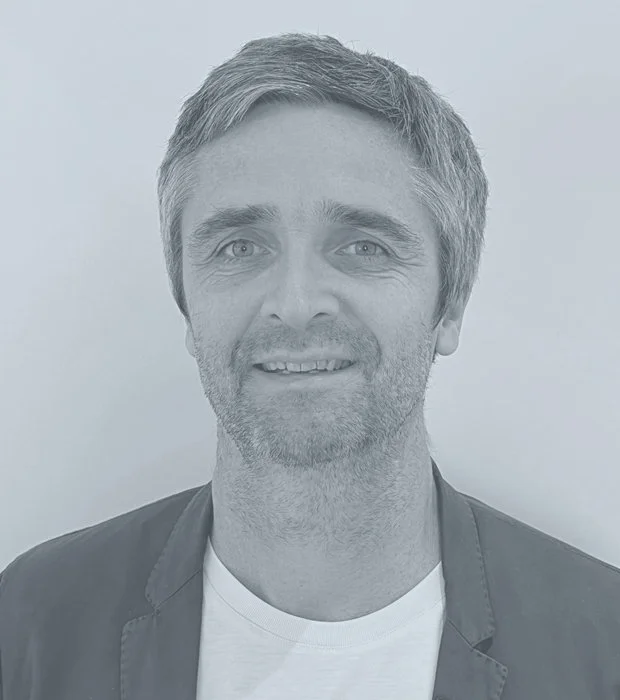
D6 has also been shaped by school leaders, teachers, students and partners across Watergrove Trust and the wider network. We are grateful to all who have contributed.
Chief D6 Architect & Innovator
Mark Moorhouse
Mark is the founder, creator and chief architect of D6. His primary role is to act as the subject matter expert, articulating the core thinking, presenting the robust research that underpins the model, and explaining the evolution of D6 from concept to current structure. He is the guardian of the D6 methodology and its philosophical roots.
D6 Network Architect
Douglas Archibald
Douglas leads the growth of the D6 Network, helping schools and trusts across the country learn about, adopt and successfully implement the D6 model. Drawing on more than twenty years' experience designing high-impact education networks and supporting system change, he focuses on ensuring D6 spreads with quality rather than simply with speed. His work combines implementation, collaboration and knowledge sharing so that schools learn from one another and the model continues to evolve while remaining faithful to its core design principles.
D6 Alchemist of Application
Jodie Neville
Jodie possesses a genuine and profound passion for D6 and its positive impact, having successfully launched the model within the primary education phase, as well as working with secondary. She maintains responsibility for the day-to-day driving, leading and steering of D6 implementation across our Watergrove, whilst directly supporting schools implementing D6 beyond the trust. Her key oversight includes ensuring the model's application is consistently effective and avoids lethal mutations.
Interested in finding out more?
We would be glad to talk. Initial conversations are informal, with no expectation that schools commit to anything.
D6 is developed by Watergrove Trust and is open to schools and trusts across a range of contexts.